Developing Idol forms through Offcuts
Some of my work is based on death and what remains. It seems to me that we cannot not be our ancestors. Physiologically, we are composites of the dead—faces, bones, inherited gestures. Psychologically, they live on in us as well: in our memories, in temperament, in the unconscious.
When my parents died, I made shrines to them, first in their homes, then later in my own. Photographs, flowers, my father’s gardening gloves, my mother’s glasses. These constructions helped me grieve. Dismantling those shrines, blowing out the final candles in their empty houses: it was one of the hardest things I have ever done.
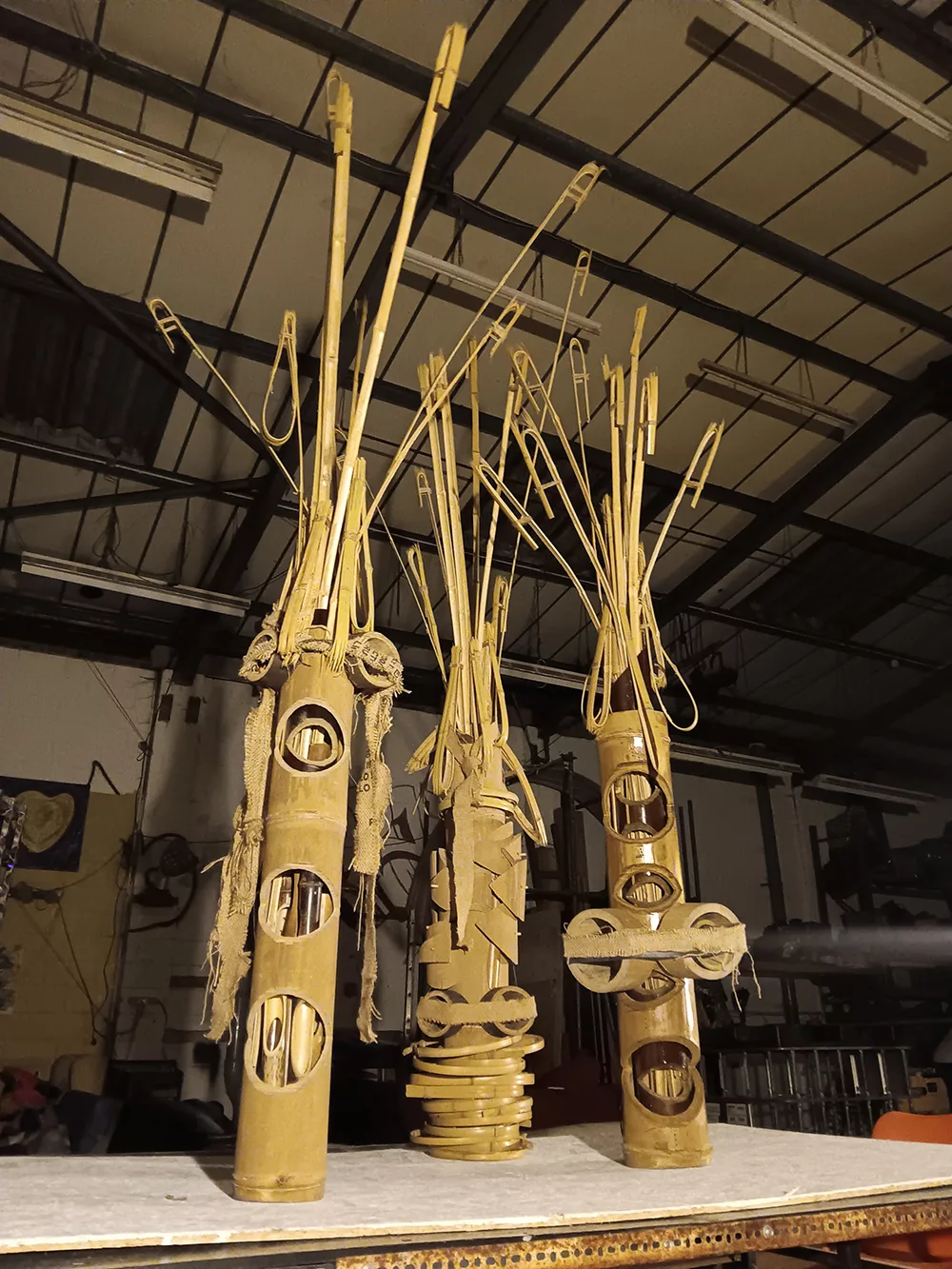
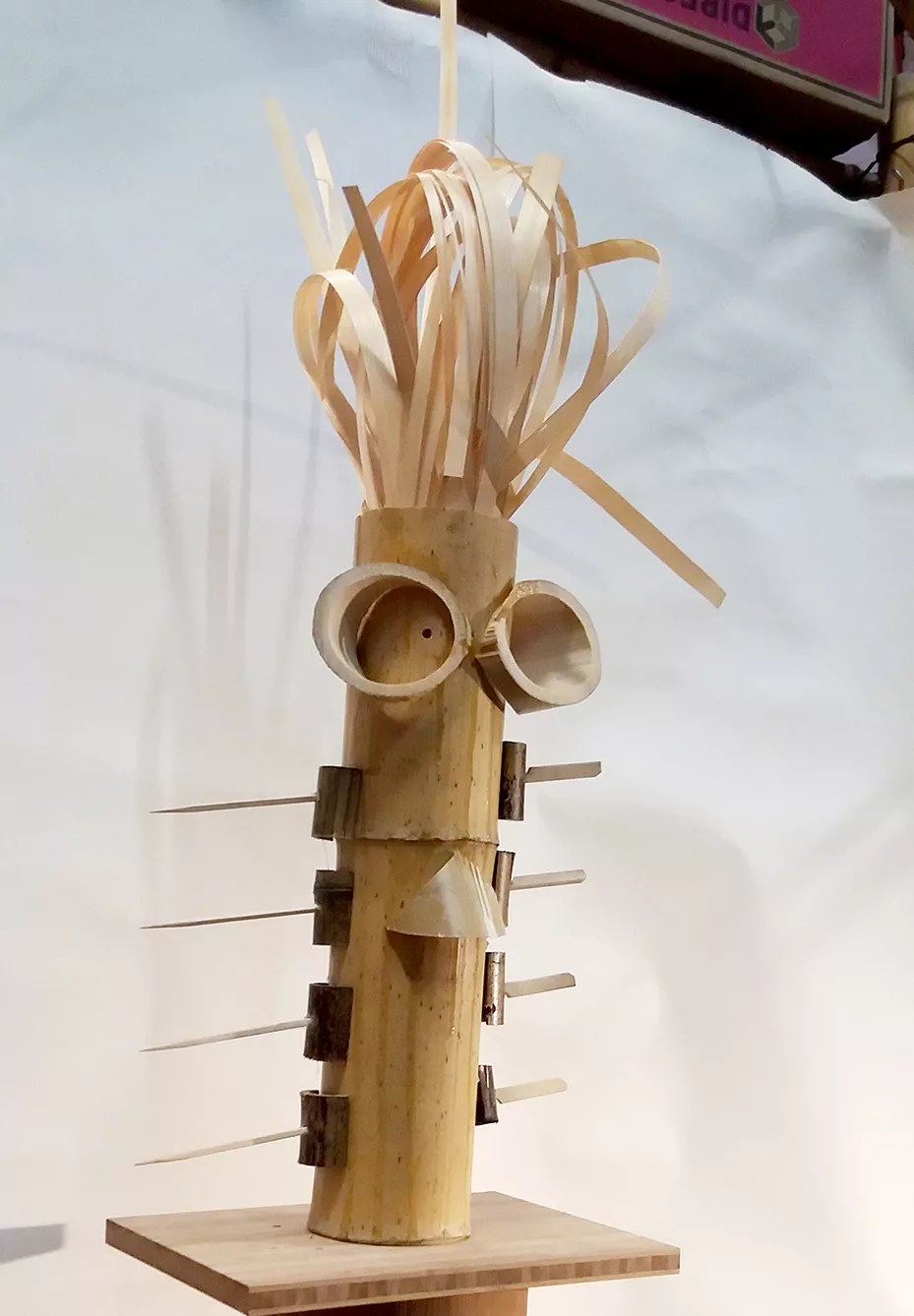
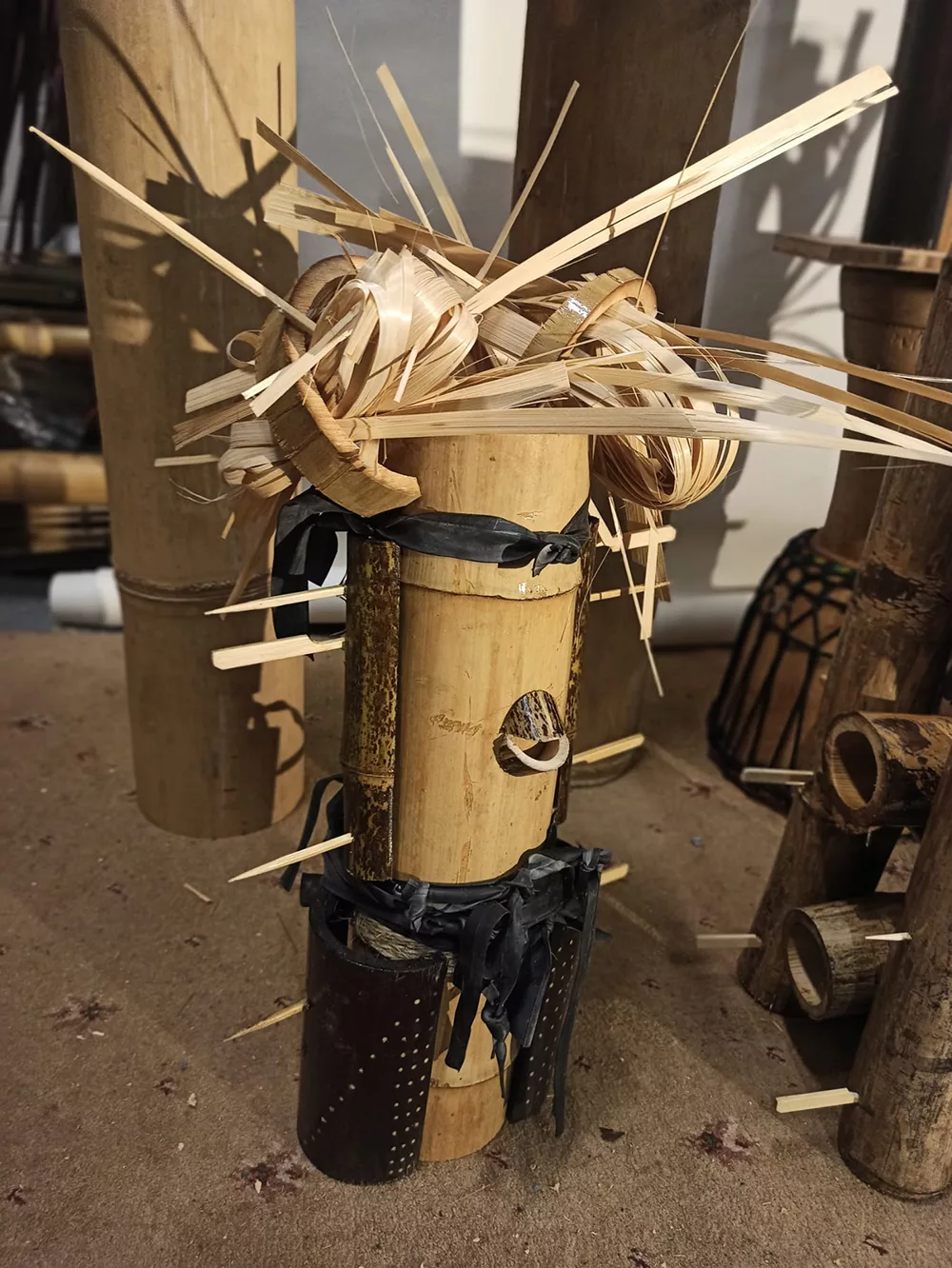
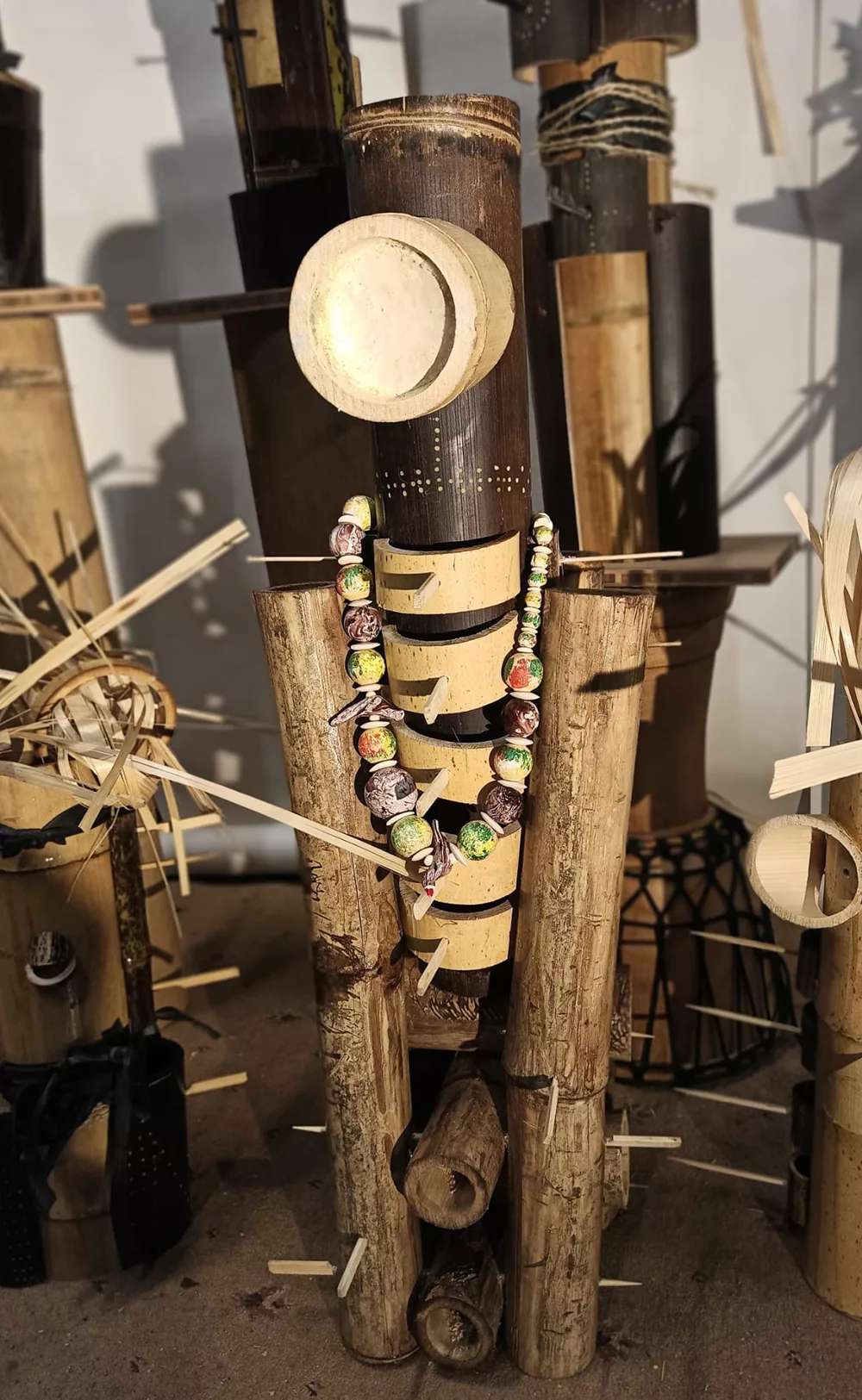
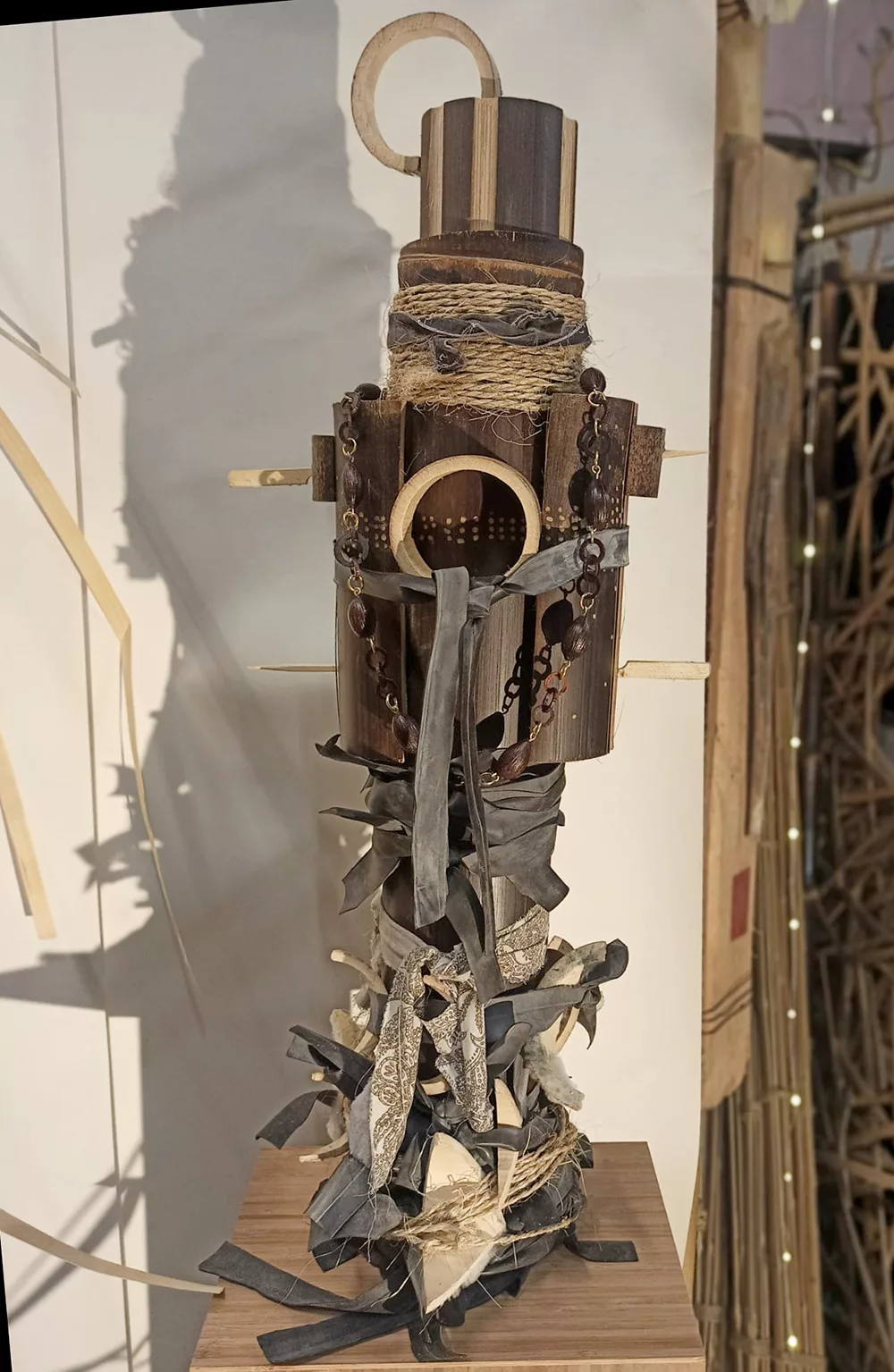
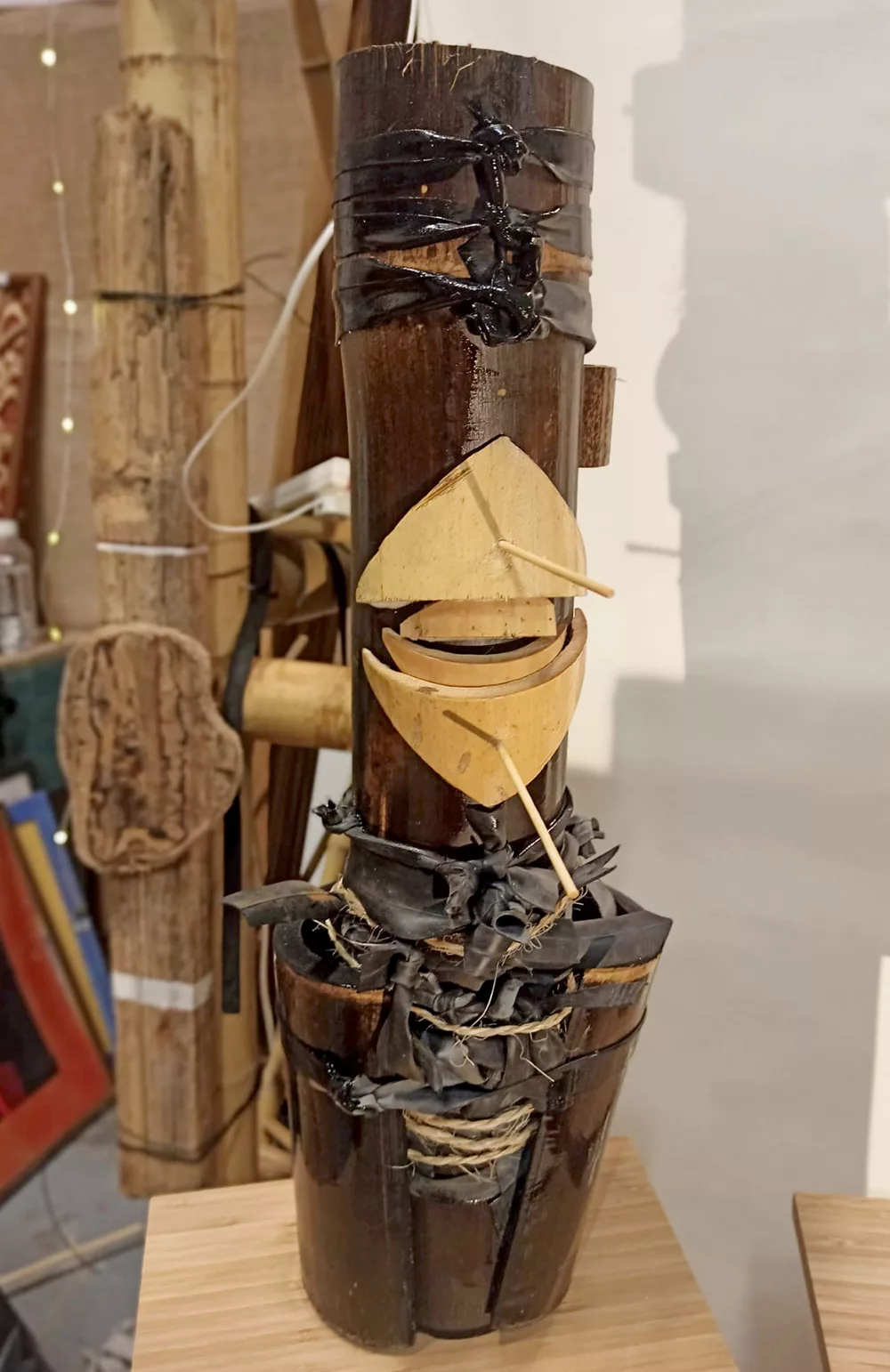
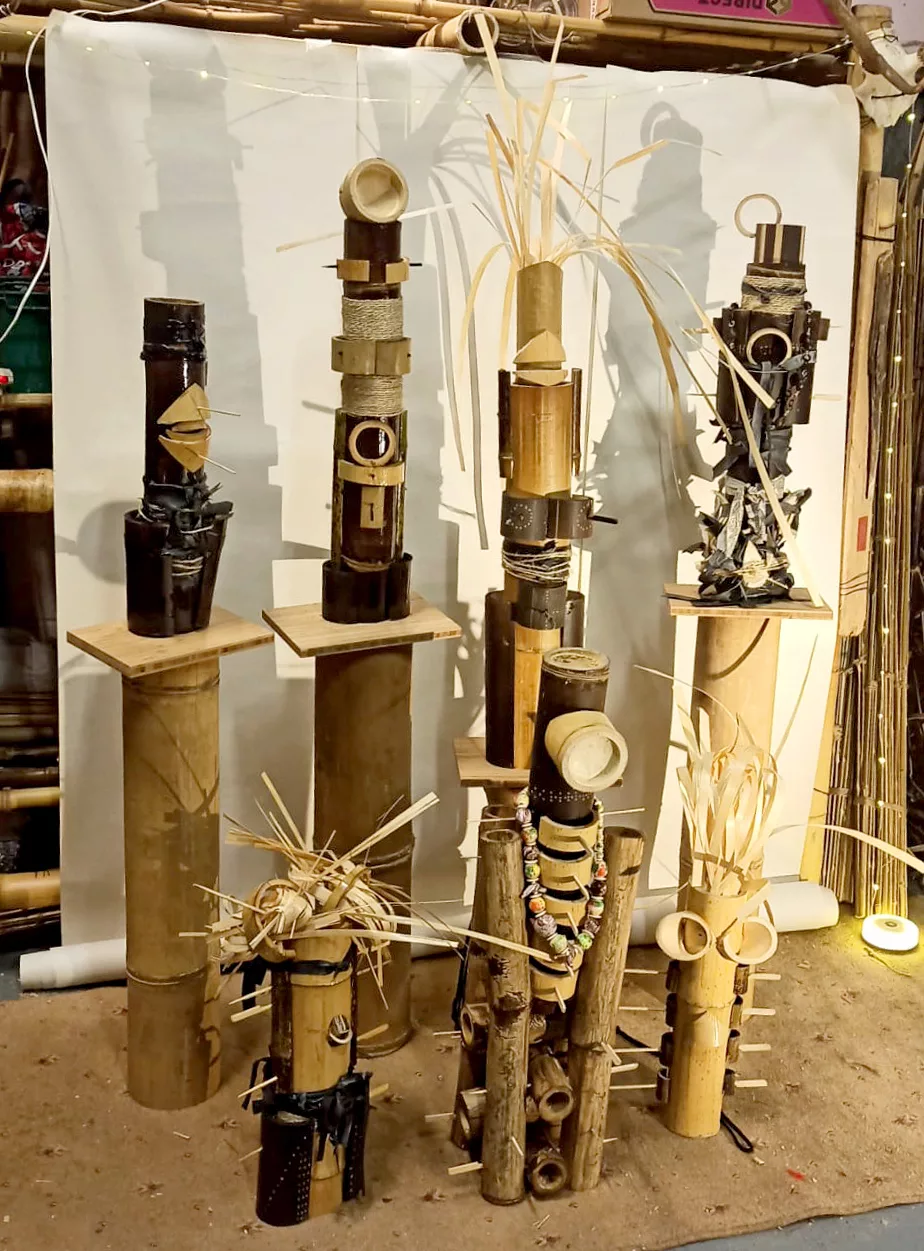
The bamboo idols series emerged as a continuation of those shrines.
I do not imagine the dead as they were in life. Whatever it is in fragments. Those shards persist—sharp, tender, incomplete. The idols are not portraits of my parents or relatives; they are responses to the cuts their deaths made in me. Each form carries a distinct presence or temperament.
In that sense, these works function as idols: not objects of superstition, but sites of where I attend to the dead. They are attempts at communication with something that cannot speak back. I sometimes wonder how my parents can no longer be here, what form they might now take, and what has become of the rest of my dead family. When I worked with those questions, the forms emerge.
Bamboo feels inseparable from this inquiry. It carries an ancient quality – in the studio it can feel watchful; when a piece is completed, there is sometimes a perceptible brightness in the space.
The idols are constructed from three species of bamboo: Chinese Moso, Indonesian Java Black, and Bambusa multiplex from Cambodia. Different sections of the culm are dowelled together using bamboo skewers. Additional materials include recycled inner tubes, Chinese calligraphy ink, varnish, and engraved dot patterns. The stands are made from Giant Asper bamboo, a species that grows in dense clumps and can reach over forty metres in height—taller than the largest oak.
These works are somewhere between sculpture and shrine. They are not about closure. They are about learning how to live with the dead.